Buying checklist
Adjustable Dumbbells: What to Check Before You Buy
This guide contains affiliate links. If you buy through them, Holistic Life may earn a small commission at no extra cost to you. How we use affiliate links.
Quick answer
- Adjustable dumbbells swap many fixed pairs for one compact set.
- Check eight things: weight range, increments, how the weight changes, handle, footprint, noise, locking mechanism and returns.
- Start lighter than you think you need, and pick a set with small jumps.
- Sales come and go, but this checklist stays the same.
Adjustable dumbbells let you change the weight of one pair instead of storing a whole rack. That makes them popular for small homes and for anyone who expects to get stronger. They are also a common find in Black Friday sales.
This is a nurse-run site, and this guide is a plain checklist. It does not name brands or models, because those change often. Sales come and go, and the checklist does not, so you can use it any time of year.
Strength work matters. The CDC says adults need muscle-strengthening activity on at least 2 days each week, and dumbbells are one simple way to do it at home.
Fixed pairs or adjustable?
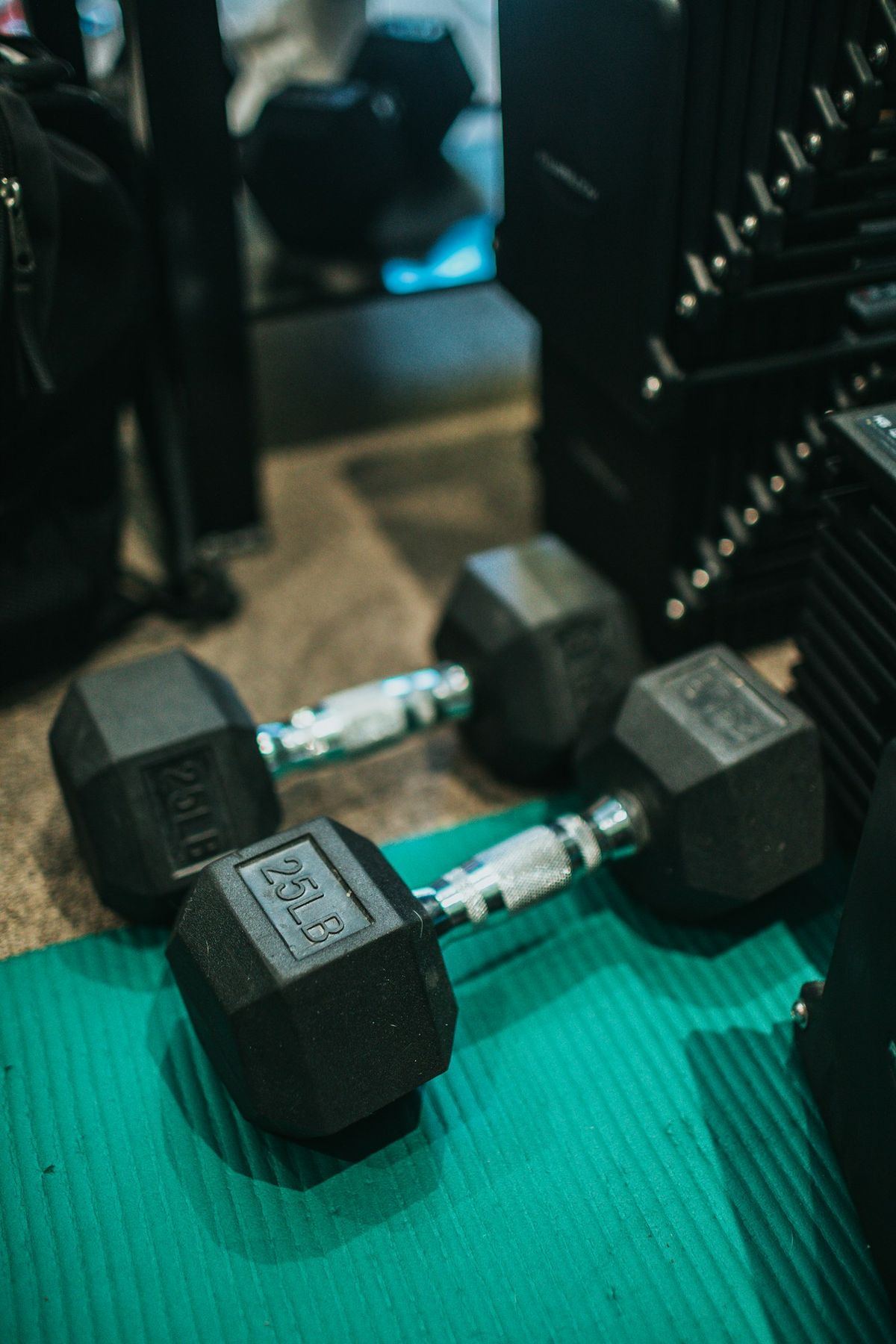
Fixed dumbbells are one weight each. You grab them and go. They have no moving parts, so there is little to break, but a full set takes up room and you need a pair for every weight you want.
Adjustable dumbbells swap plates or settings on one handle. You save space and can step up slowly. The trade-off is a mechanism that can wear, and a few seconds to change weight between moves.
A beginner with little space might start with one light fixed pair, then move to an adjustable set once the moves feel easy.
The 8 things to check
- Weight range, now and later. Look at the lightest and heaviest settings. The lightest should feel easy for beginner moves like shoulder presses. The heaviest should leave room to grow for a year or two. A range that starts too heavy is a common mistake.
- Increment size. This is the jump between weights. Small steps let you add a little at a time, which many beginners find easier on joints and form. Big jumps can leave you stuck between too light and too heavy.
- How the weight changes. Systems use a dial, a pin or a spin-lock collar. Ask how many seconds a change takes and whether you need tools. If it is slow or fiddly, you may skip changing weights and stay on the wrong one.
- Handle length and grip. A handle should fit your hand with a little room, and the surface should grip without scraping your palm. If you plan two-handed moves like a goblet squat, check that the handle is long enough.
- Footprint and stand. Measure the shelf or corner where the set will live. Check whether it comes with a tray and whether you need a stand. Lifting heavy weights from the floor can strain your back, so a tray or stand at a sensible height helps.
- Noise and floor protection. Plates that click against each other or drop on the floor make noise, and they can mark floors. A rubber mat under your workout area and under the tray helps, especially in an apartment.
- Durability and warranty. The locking mechanism takes the most wear. Read the warranty length and what it covers. Look for reviews that mention the lock after months of use, not just on day one.
- Return policy. Dumbbells are heavy and awkward to ship back. Know the return window, who pays for shipping and whether the box must be kept before you order.
Adjustable dumbbells
One pair that changes weight can stand in for a whole rack, which helps in a small home. They suit people who plan to get stronger over time.
What to look for
- A starting weight light enough for a beginner
- Small jumps between weights
- A locking system that clicks in clearly
See adjustable dumbbells on Amazon (paid link)
Dumbbell stand or tray
Many adjustable sets come with a tray, but not all. A stand keeps the weights off the floor and makes changing weight easier on your back.
What to look for
- A fit made for your set, or a wide adjustable tray
- A stable base that does not tip
- A height that avoids deep bending
See dumbbell stands on Amazon (paid link)
Rubber floor mat
A mat protects the floor, cuts noise and gives your feet a steady surface for lifting.
What to look for
- Dense rubber that is firm, not squishy
- A size big enough for both feet and the dumbbells
- A material with little smell
See rubber floor mats on Amazon (paid link)
Light fixed dumbbells
A pair of light fixed dumbbells is a simple way to learn the moves. They are quick to grab and have no parts to adjust.
What to look for
- A weight you can lift for 10 to 12 slow reps
- A comfortable, non-slip handle
- Flat sides so they do not roll
See light dumbbells on Amazon (paid link)
Set it up safely
Before every set, check that the weights are locked on both sides. Pick up the dumbbell over a mat, and put it down on a tray or mat instead of dropping it. Start lighter than you think you need, and move slowly. If you want a simple routine, try our beginner dumbbell workout.
Who should check with a clinician first
Talk with your doctor or another clinician before you start strength training if any of these apply to you:
- Joint, back or shoulder pain
- A recent injury or surgery
- Heart or blood pressure conditions, or pregnancy
- Dizziness or balance problems
Your clinician can tell you what is safe for you and may suggest lighter weights or a slower start.
Before you order
Write down the space you have, the floor type and the lightest weight you want. Run any set through the eight checks. If you are still planning the room, our small space home gym starter kit shows what to buy first. Shopping for someone else? Our home gym gifts guide covers more ideas.
Frequently asked questions
How heavy should my first dumbbells be?
Pick a weight you can lift slowly for 10 to 12 reps with good form, where the last few feel challenging but not shaky. If you are unsure, start lighter. A clinician or trainer can help you choose.
Are adjustable dumbbells as sturdy as fixed ones?
It depends on the design. Fixed dumbbells have no moving parts to wear. Adjustable ones add convenience, so the locking mechanism and warranty matter. Check that the weights lock firmly before every set.
Sources
Save this guide for later
Tap a pin to save it to your Pinterest boards.